
 Diabetes
 Gestational Diabetes
 Pediatric Diabetes
 Thyroid Disorders
 Obesity
 Short Stature
 Infertility
 Hirsutism
 Hypogonadism (Delayed
puberty)
Hypogonadism (Delayed
puberty)
 Polycystic Ovarian
Disorder
Polycystic Ovarian
Disorder
 Osteoporosis
 Menopausal Problems
 Sexology Disorder
 Pituitary and
adrenal disorder
Pituitary and
adrenal disorder
 parathyroid, osteoporosis
and other metabolic bone
diseases
parathyroid, osteoporosis
and other metabolic bone
diseases
Thyroid Disorders
Thyroid Disorders
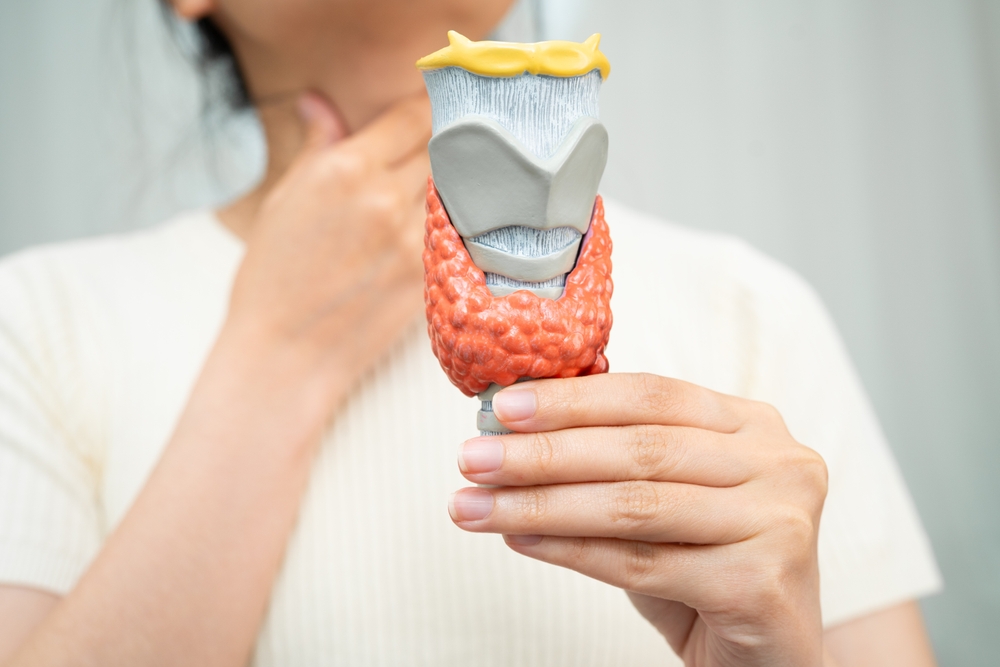
The thyroid is a small, butterfly-shaped gland at the base of the neck that produces hormones controlling how the body uses energy. When it produces too much or too little of these hormones, it can affect metabolism, heart rate, body temperature, weight, and mood — sometimes so gradually that the changes are mistaken for everyday stress or aging.
Thyroid hormones regulate nearly every organ system in the body, so even a small imbalance can have wide-ranging effects. Thyroid disorders are common, especially in women, and are often manageable once correctly diagnosed — but many cases go unnoticed for years because the symptoms build up slowly.
Hypothyroidism (Underactive Thyroid)
Occurs when the thyroid gland doesn't produce enough hormone, slowing down the body's metabolism. It's often caused by an autoimmune condition called Hashimoto's thyroiditis. Common signs include fatigue, unexplained weight gain, constipation, dry skin, hair thinning, feeling cold, and low mood.
Hyperthyroidism (Overactive Thyroid)
Occurs when the thyroid produces too much hormone, speeding up metabolism. It's frequently caused by Graves' disease. Common signs include unexplained weight loss, rapid or irregular heartbeat, anxiety or irritability, tremors, excessive sweating, and difficulty tolerating heat.
Thyroid Nodules & Goiter
Thyroid nodules are lumps that form within the thyroid gland; most are benign, but they need proper evaluation — through ultrasound and, if needed, a fine-needle aspiration biopsy — to rule out malignancy. A goiter refers to overall enlargement of the thyroid gland, which can occur with either an overactive, underactive, or normally functioning thyroid.
Signs and Symptoms to Watch For
Because thyroid symptoms overlap with many everyday complaints, it's worth getting tested if you notice:
- Unexplained weight gain or weight loss
- Persistent fatigue or low energy
- Feeling unusually cold or unusually hot
- Rapid or irregular heartbeat
- Hair thinning or hair loss
- Dry skin or brittle nails
- Swelling at the front of the neck
- Changes in menstrual cycle
- Mood changes, anxiety, or low mood
Diagnosis & Treatment
Diagnosis typically starts with blood tests (TSH, T3, T4, and thyroid antibodies where relevant), along with a physical examination of the neck and, when needed, a thyroid ultrasound. Treatment depends on the specific condition: hypothyroidism is usually managed with daily thyroid hormone replacement, while hyperthyroidism may be treated with anti-thyroid medication, radioactive iodine therapy, or, in select cases, surgery. Regular follow-up blood tests help fine-tune the dosage and keep hormone levels stable over time.